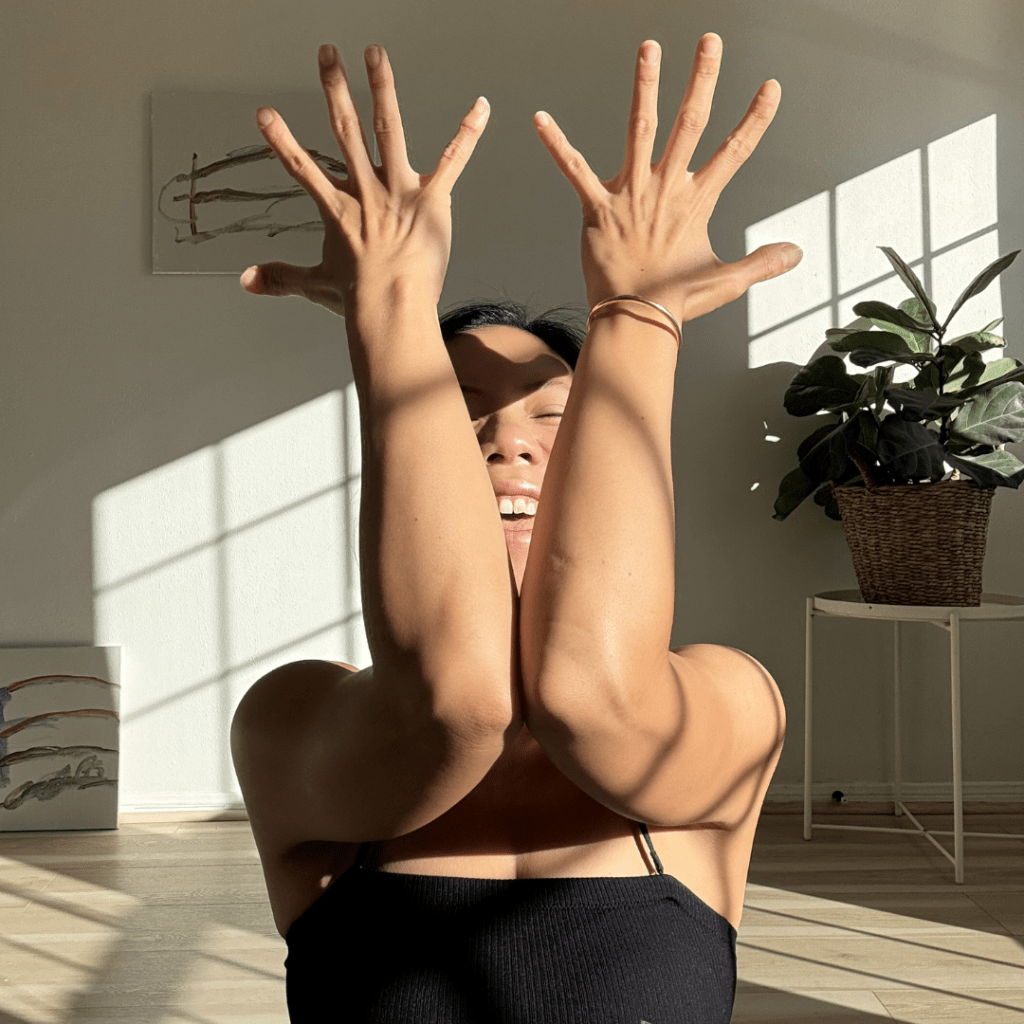
Have you ever gone for a massage, felt fresh and stretchy right after, but find out the next day it was like nothing had ever happened?
I’ve been trying to explain this in class lately, but I think it deserves more space. So here we go!
First things first… massage is one of my favorite things. It’s genuinely beneficial — we’ll talk about that another time — but our bodies need more than that.
During a massage, the therapist moves you. They stretch you further than you’d go on your own, into angles and ranges you normally can’t reach. It feels good. Sometimes a little painful. But oh….so satisfying. What’s happening there is flexibility — your body’s ability to be stretched when something external is doing the work.
But in everyday life, you are doing the work. You walk, you run. You reach up to grab something off a shelf. (In the past, we picked fruit straight from the tree.) You bend your knees to sit down. You catch yourself when you’re about to fall. That’s mobility — your body’s ability to move itself through a range of motion with control and strength.
Same body. Very different skills.
We’re born with both. But over time, especially when life gets busy and movement gets repetitive, we lose them — and mobility in particular has to be earned back.
The good news is that yoga does a lot for mobility. And it’s why, when you practice consistently, you start to feel more free in your body. Some athletes — runners, volleyball players, baseball players, golfers etc — turn to yoga specifically for this reason. More range of motion = more efficiency. And for a lot of us, it simply means feeling lighter, live safer and less achy after a long day.
So what’s actually happening in the body when yoga works this way? Let me explain here. A big part of it comes down to something called eccentric strength — or length under tension. This is when your muscle is working and lengthening at the same time. Think about slowly lowering into Chaturanga, or reaching your hand back in Locust and pressing the hands down while straightening the arms in Down Dog. Your muscles are lengthening while under tension — and this is one of the most effective ways to build both strength and control. It’s not just stretching. It’s not just strengthening. It’s your body learning to own that range, not just borrow it.
Eccentric training builds strength while lengthening muscles at the same time — improving flexibility and range of motion while reducing the risk of injury. This is why your yoga teacher (me ) might cue things that seem counterintuitive. Skip the bind. Straighten that back leg and press the foot down. Don’t rush the transition. It might not feel like the “stretchiest” option in the moment — but that’s exactly the point. We’re building strength where most of us are weakest.
I’m genuinely glad that yoga today is backed by so much more science. We’re practicing in a smarter, more intelligent way. And honestly? It works.
That’s the difference between leaving a massage table feeling amazing… and actually being able to reach the top shelf with ease and safety. Your body is capable of so much. Let’s help it remember.
And by the way — even I, Blossom, someone who considers herself strong, flexible, and with a big range of motion, a very consistent yogi — am unbelievably tight in certain parts of my body. I’ll share all about it in the next article.
____
 Blossom Being Yoga
Leave a comment