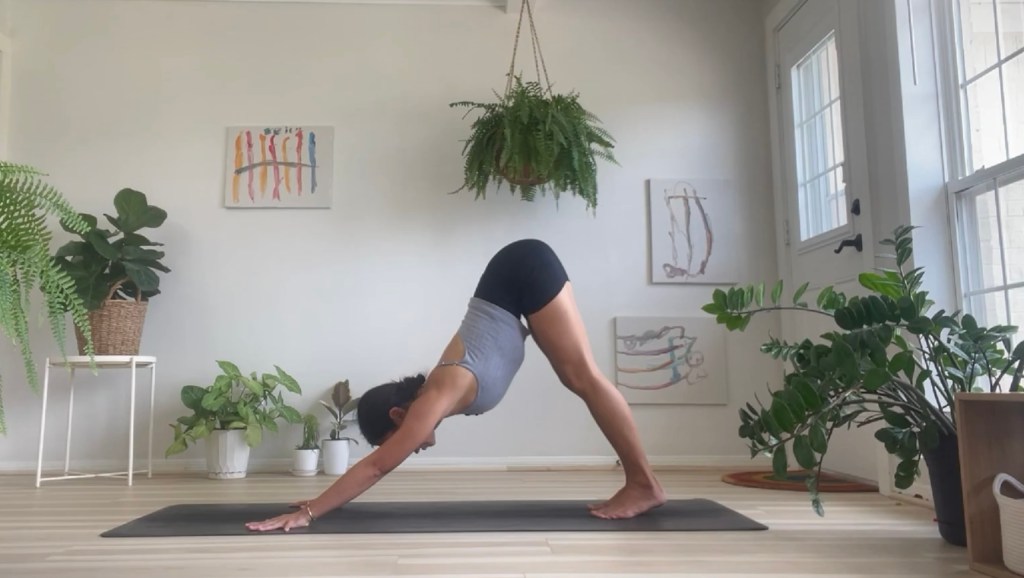
A student recently asked me, “Why are there so many Downward-Facing Dogs (Adho Mukha Svanasana) in one yoga class? And why does everything always seem to lead back to this pose?” Good question!
Stretch, Strengthen, and Find Your Sweet Spot
There’s no one-size-fits-all answer, but here’s why I think Downward-Facing Dog is such a superstar in yoga. It’s accessible for just about everyone. Sure, it might look a little different on each body, but most folks can hang out here for a solid 4-8 breaths. For newbies, it might be a bit of a wobbly challenge—maybe even a little dizzying—but it’s usually manageable and, dare I say, enjoyable. (It’s better than the Chair pose!) It’s that perfect blend of “just enough” work, leaving you with a bit of energy to focus on your breath and maybe even crack a smile.
The Ultimate Me-Time Pose
Mentally, this pose has a cool trick up its sleeve. Think about it: Your entire body is working—hands, arms, shoulders, core, thighs—everything’s getting a piece of the action. Plus, you’re upside down! With your face pointing to the ground, all you can really see are your hands, your mat, maybe your feet, and possibly someone in the background (but they’re a blur, right?). It’s like a little “me-time” cocoon where you can zone in on yourself, reorganize your breath, and get yourself ready for the next round of XYZ poses.
How to Make Your Downward-Facing Dog Even Yummier
Want to take your Downward-Facing Dog from good to “mmm, so good”? Try these three steps:
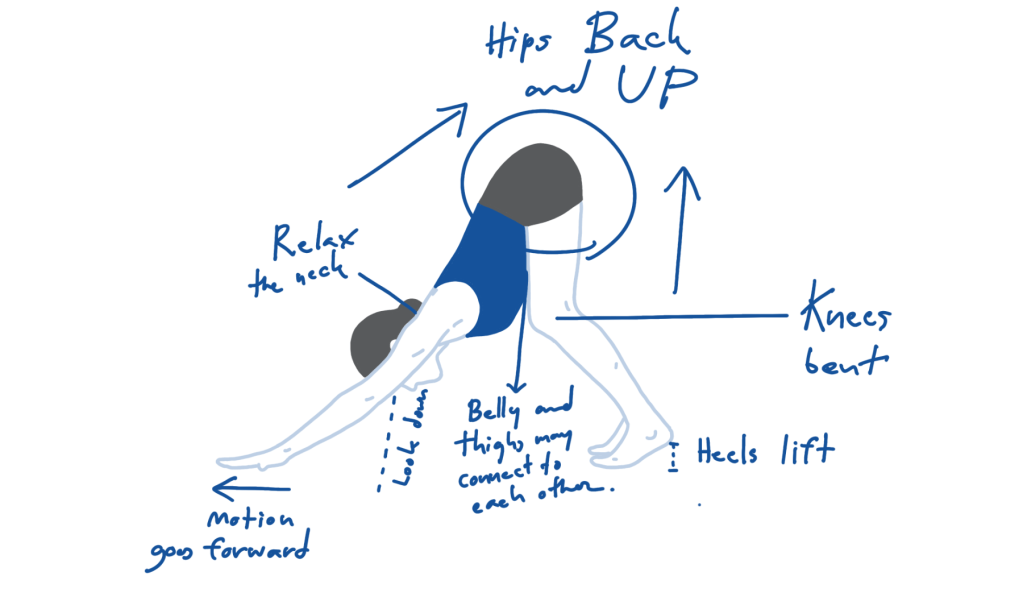
1. Lengthen : Ready for more? Keep that awesome flat back and upper body posture, then bend your legs and peek between your hands. You’ll feel even more length in your back and neck. Now, here’s the magic moment—slowly straighten your legs, but keep your upper body exactly as it was when your legs were bent. Keep those heels lifted and your hips high. Feel the stretch deepen? Yep, you’re doing it right!
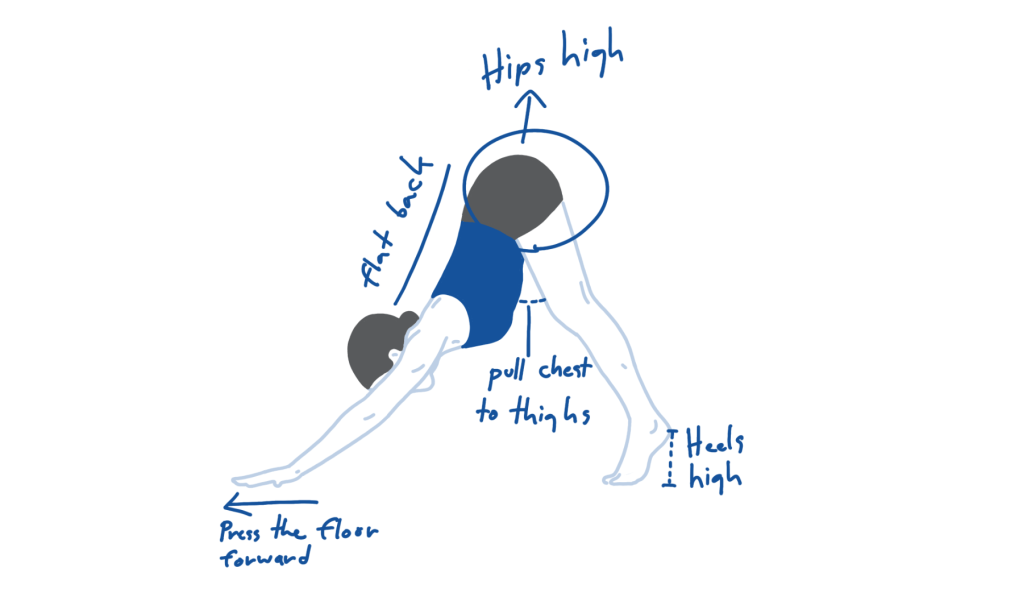
2. Lift: Lift those knees and send your hips BACK and UP! Keep those knees bent and heels lifted, and really focus on getting those hips high. Think about sending your mat forward with your hands, and imagine your chest cozying up to your thighs. Feel that stretch in your spine and hips? That’s the good stuff, giving your back a break from being vertical all the time.
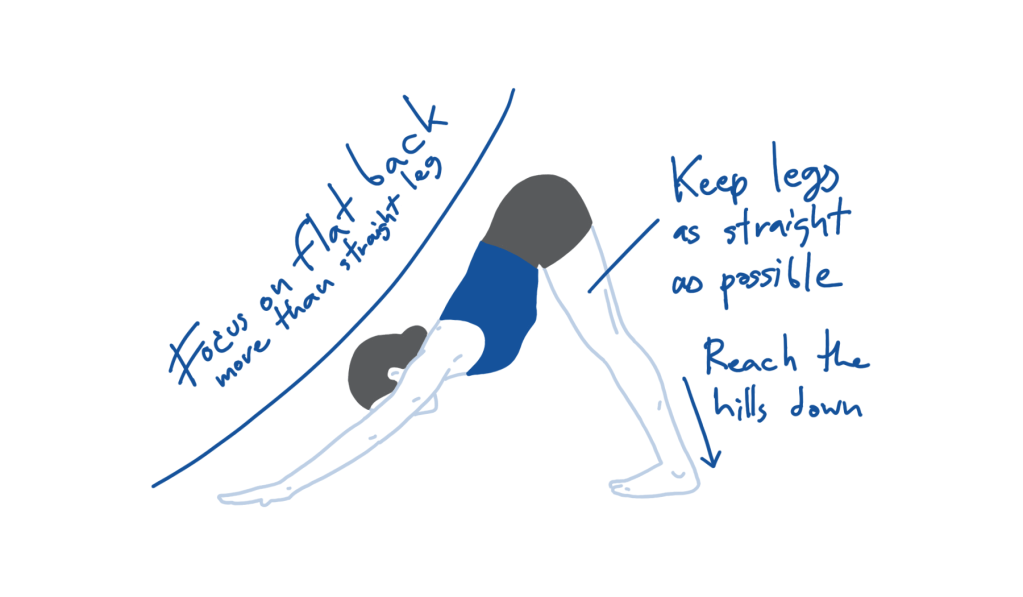
3. Heels Down, Fun Up: Finally, it’s time to try reaching those heels down to the floor. For some, this might be a little tricky—especially if your calves are feeling tight—but give it a shot. Even if your heels don’t quite touch the ground, just reaching for it can bring a whole new level of yumminess to your Down Dog. Breathe into the tight spots, hold for a few breaths, and then decide if you want to lift your heels back up or keep them low.
As you play with these steps, think about pulling your belly button in and up, pointing your tailbone down to ease the load on your lower back, and spreading those fingertips wide for a super solid base. There are so many little tweaks that can make your Downward-Facing Dog feel even more delicious.
There’s nothing to prove, but there’s a lot to discover and learn.
Downward-Facing Dog is like the MVP of yoga poses—always there when you need it, steady, and oh-so-reliable. It’s a pose that lets you connect with your breath, your body, and your inner groove. Whether you’re just starting out or you’ve been practicing for years, there’s always something new to discover here. So next time you’re in this pose, stretch a little deeper, smile a little wider, and enjoy the ride!
 Blossom Being Yoga